Please Note: This article contains descriptions and narratives of violence and genocide, as well as an analysis of human behavior relating to sensitive topics, including racism, intolerance, religious persecution, forced sterilization, sexual violence, physical violence, the death of a child, and death. Some details may be disturbing or upsetting to readers. Sydney Marlowe is a composite character; every other person in this article is real, and their words come from sworn testimony and the public record.
Visit Mental Health America’s site for information on mental health, getting help, and taking action.
Revised November 2026.
Introduction
The following is part of a series concerning genocide and the ten stages of genocide outlined by Gregory H. Stanton. The purpose is not only to raise awareness of the multiple genocides from the past and the present but to provide a set of actions within realistic time constraints that you can take immediately to promote change, prevention, and tolerance. Each article covers a different stage of genocide, with a specific country or region in focus that has experienced or is currently experiencing genocide.

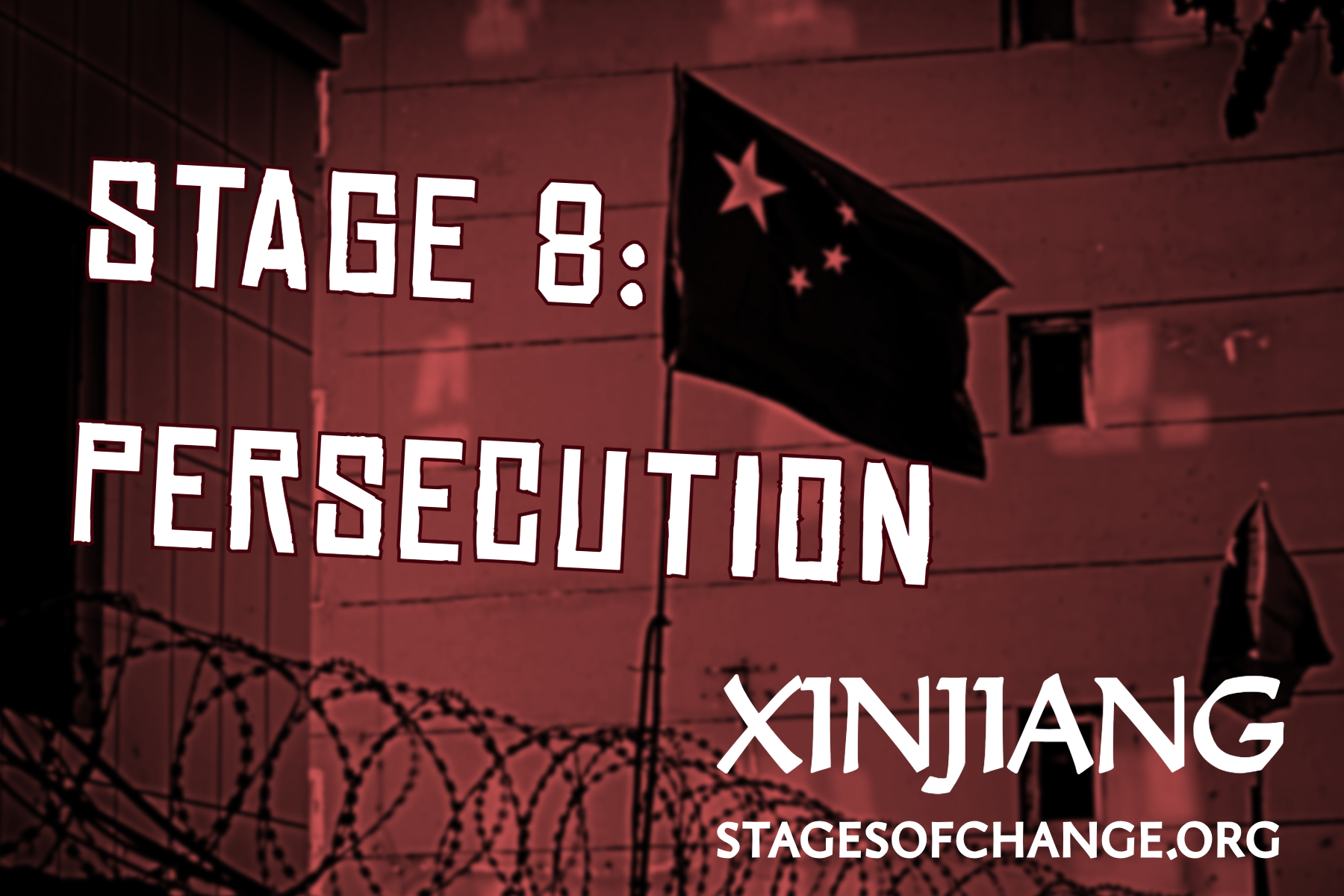
Persecution is the eighth stage of genocide.
The case study is the Xinjiang Uyghur Autonomous Region of China, where, since 2017, an estimated one million or more Uyghurs and other Turkic Muslims have been held in a network of camps and prisons, and where the United States and several parliaments have determined that the People’s Republic of China is committing genocide and crimes against humanity.
I. Sydney Marlowe, a Composite. Somerville, Massachusetts. February 2024.
Sydney Marlowe is not a real person. She is a composite, put together for this article from habits that millions of real shoppers share, and nothing she says or does here comes from an interview. What happens to her package is drawn from the public record.
Say she is twenty-nine and in her second year of a master’s program in environmental policy, in a Somerville apartment furnished on a graduate stipend. It is 8:53 on a Tuesday night in February, her literature review is half-finished, and she has earned some time to scroll. She opens Temu.
Temu is one of the more recognizable storefronts of the Chinese-founded retail giant PDD Holdings, which also owns Pinduoduo, and it is certainly not the sole operator. Shein functions as a close competitor.
The front page resembles a Ross, a Marshalls, and a Goodwill with a shared identity crisis, all crammed into one awkward but somehow miraculous digital space, with even greater variety and, on second glance, astoundingly cheaper prices: solar outdoor lamps, leather slippers, a women’s engagement ring, teal bamboo bed sheets, a denim patchwork jacket, and a magnetic screen door—all under seven dollars each.
A set of four throw pillows goes into her cart, and then a blue linen blouse with a scoop neck, listed at $5.49, with 4.6 stars across 2,347 reviews. It’s a “lightning deal,” and a bright red timer counts down in the corner of the screen:

Subscribe to continue reading
Become a paid subscriber to get access to the rest of this post and other exclusive content.