
WHERE DID YOU LEARN THAT?
We’re facing a crisis of misinformation, especially among young people. Media literacy is no longer a “nice-to-have” skill. It’s crucial for navigating through a digital universe filled with potential for great knowledge and at the same time the risk of harmful misinformation. Unfortunately, most of us were never taught how to critically analyze media specifically. We struggle to process the overwhelming amount of information presented to us, and don’t always recognize bias.
The consequences? Rising antisemitism, normalization of white supremacist ideas, Islamophobia, conspiracy theories, false equivalencies, hate speech, and the disturbing trend of Holocaust distortion and/or denial.
What’s at Stake?
Our youth are immersed in a world of information like no other generation has experienced. With algorithms, social media, psychology tactics, and artificial intelligence, it’s never been so difficult to discern fact from fiction. And when false information spreads, it can rapidly lead to confusion and frustration at best, or polarization and violence at worst.
As educators, we simply can’t sit back and hope this issue will sort itself out. We have to explicitly model and teach what critical thinking and media literacy actually looks like in action.
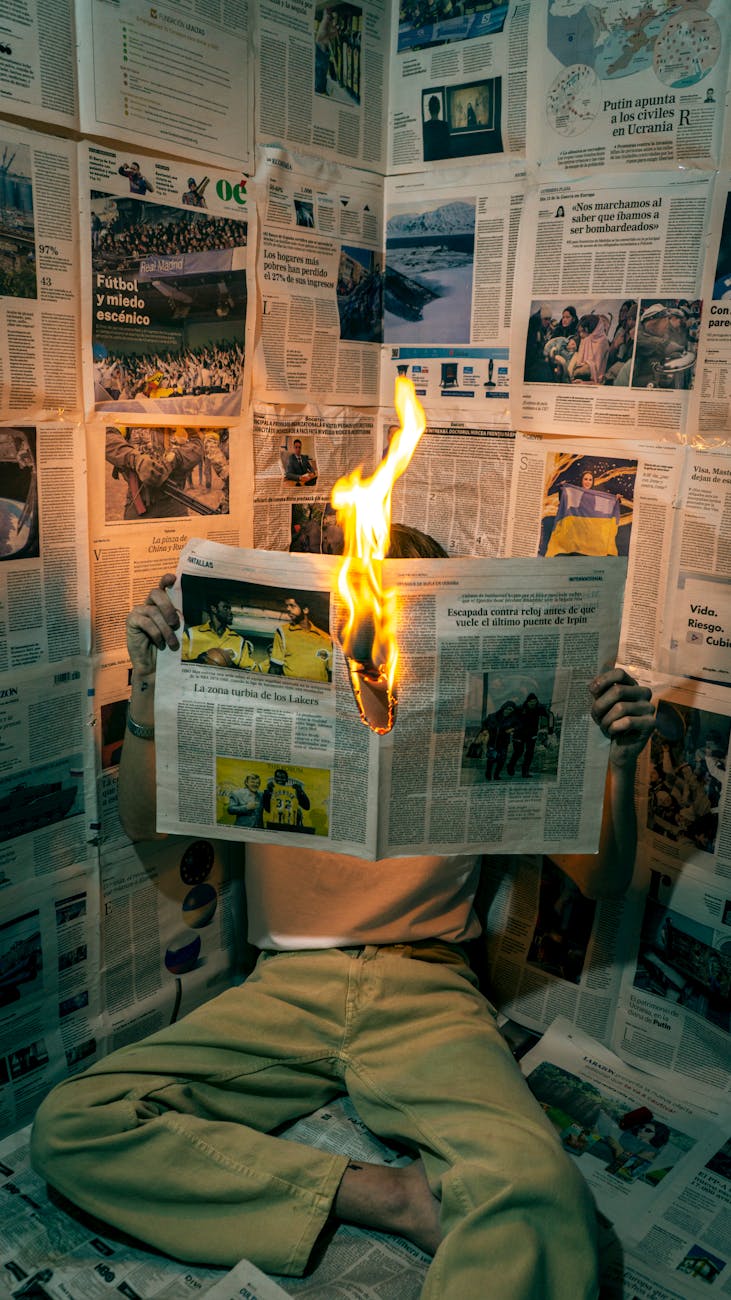
STRATEGIES FOR EDUCATORS

Empower with Skills, Not Just Facts.
It’s no longer enough to tell students what happened during the Holocaust or other challenging histories by presenting only the facts.
At the secondary level, it’s also insufficient to teach genocide as a moral equivalence to bullying or being kind. We must teach students how to think critically. We must equip them with the skill of discernment when analyzing and evaluating media in all forms.
Start by focusing on:
- Analyzing Arguments: Help students analyze argument by recognizing logical fallacies and assessing source credibility. For a comprehensive list of logical fallacies and their definitions, visit here (Purdue Owl). For posters and flash cards, visit ClearerThinking. They offer specific rationality improvement suggestions and critical thinking guides. These resources are available in both physical form and as free digital copies.
- Source Evaluation: To move from analysis to evaluation, students must ask:
Who or what is the source behind the information? Are they reliable? Do their credentials suggest expertise that can be trusted? Who follows them? - Fact-Checking Tools: Introduce students to online fact-checking resources, such as Snopes or FactCheck.org. Additionally, demonstrate to students the thought process involved in seeking nuance and balanced news sources. Try this with AllSides.com. Encourage a habit of understanding (not always agreeing) with the left, right, and middle.

USE REAL WORLD EXAMPLES AND LOGIC.
Show students how misinformation plays out in real-time and in their world. How do we do this?
First, tread lightly here, as many of these discussions may be too controversial for your geographical area’s political leanings, district policies, or parent-teacher relationships.
However, when possible, bring in current examples of misinformation, conspiracy theories, or hate speech seen online or even stated by political or religious leaders. Then, take the time to dissect these problematic claims.
Have students think of claims as a simplified summary of multiple claims and assumptions. What assumptions or unsaid beliefs is the claim’s author imparting on the consumer unconsciously? Those sub-claims, too, must be evaluated. By doing this, students will inevitably discover the break in logic themselves.
Here’s an example:
Claim: LGBTQ+ individuals need not be tolerant toward Muslim individuals because their religion is intolerant and violent toward them.
Sub-claims and assumptions:
* There are no LGBTQ+ Muslim individuals.
* All followers of Islam are violently intolerant toward LGBTQ+ individuals.
* Tolerance and acceptance are always contingent on receiving the same perceived sentiment.
* Religion, with absolution, defines an individual’s actions and attitudes towards others.
* LGBTQ+ individuals are incapable of deciding for themselves how they will treat others.
All of these assumptions must be true for the stated claim to also be true. This is often what it takes to identify where the break in logic is. By also keeping the claims and content relevant to the real world, students are better able to infer context.
Need ideas for what to discuss? If appropriate, ask the students. They are seeing a stream of misinformation and extremism on a near daily basis. Often, students are genuinely curious about discovering the validity of what they see, but just don’t know how to go about it.

Encourage Healthy Skepticism.
Teach students to be curious and skeptical in the best way possible toward information they take in. When they encounter what seems like extreme or polarized viewpoints or arguments, they should ask themselves these questions, in addition to or after the strategies already discussed:
Why am I hearing this?Who might benefit from me hearing it?
Does what I’m hearing sound more solution-based or hate-based?
Importantly, just because an individual or entity benefits from you consuming their information (think paid news articles) does not automatically make it false, biased, or harmful.
Understanding the “who” or the “what” on the other end, however, is crucial to making an informed decision on how much that influence matters, and what you will do with the information, if it is worthwhile at all.
Other questions might include:
Is the information designed to provoke a strong emotional response?
Can I cross-check it with credible sources?
Does it sound right? Or does it sound fringe?
The answers to these questions should guide students naturally into slowing their thinking and understanding of media content, and either accept, reject, or dig deeper into what they hear.
Additional resources
for COMBATING misinformation, hate speech, and harmful or antisemitic conspiracy theories and stereotypes
*NAMLE = National Association for Media Literacy Education
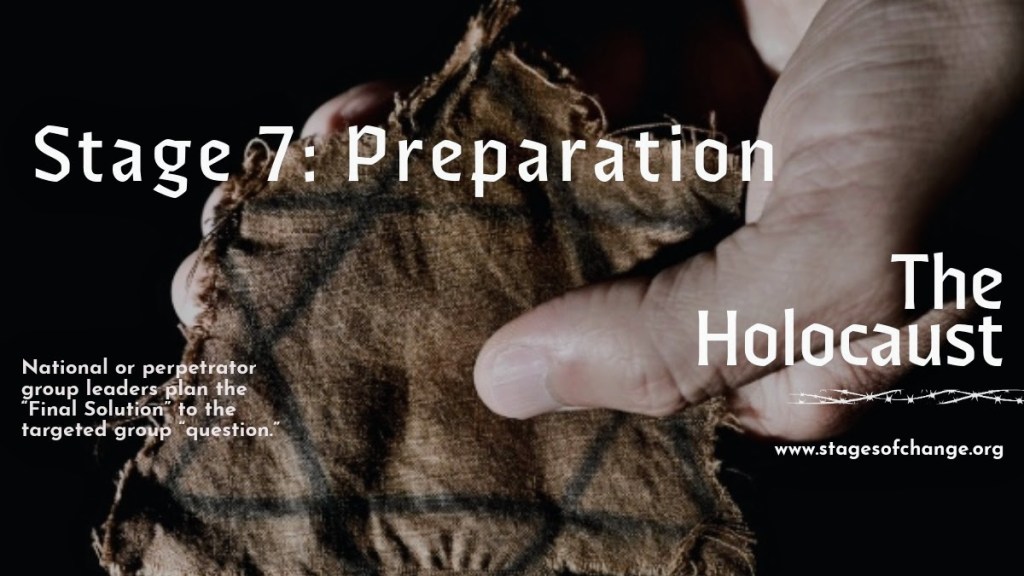

 Ten Stages of Change: Genocide Education & Prevention